
This website is devoted to all soldiers who served and continue to serve with the 299th. |
        |
Article #1 - Omaha Beach History - Warrant Officer James W. Tucker |
Provided by: Jeannie Tucker, his proud daughter |
“As a child, I never really understood the overwhelming challenges my father faced on D-Day and during WWII. As a young adult I began to learn more about the unbelievable sacrifices made on that day. Now, I am in awe of his great courage, ingenuity, dedication, honor and fortitude. As a member of what is called “The Greatest Generation”, he came back and went to work on making this country a better place for all generations to come. I honor him as my father and as one of the brave members of the "Famous 299th Combat Engineer Battalion" who fought through D-Day on Omaha Beach, Normandy 6-6-44. "First on Omaha" His spirit drives me to start each day with my head held high and to not settle for less that I am capable of in anything I do. His humanity keeps my heart connected to my fellow man as he would never send a man into a fight he wouldn't himself fight first." Jeannie Tucker Click Here for news reports... |
CWO James W. Tucker (1919-1983) |
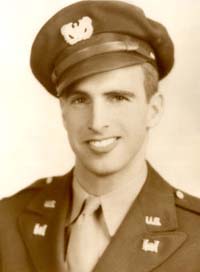
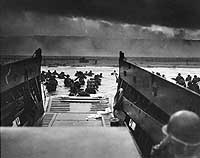
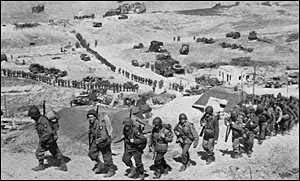
80 years ago, a young warrant officer named James W. Tucker arrived upon a hellish stretch of beach called Omaha and survived to tell about it... “There were fires everywhere. A wrecked landing craft, still loaded with tanks, burned fiercely. Ammunition exploded. There was shellfire, noise, confusion... and bodies all around.” Waves of men and boats swept in from the sea, a part of the mightiest invasion armada in history and from the heights, German gunners tore them apart. |
Photo: Robert F. Sargent D-Day Omaha Beach, Normandy June 6th, 1944 |
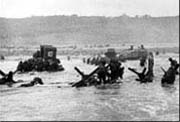 |
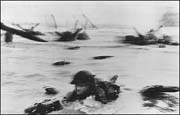 |
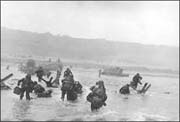 |
Photo: Robert Capa |
Photo: Robert Capa |
Photo: Robert Capa |
“I was one of the lucky ones.” Jim Tucker said. “I never thought I would live through it.” On D-Day he was a proud member of the now famous 299th Engineer Combat Battalion, in charge of eight armored bulldozers. The Battalion's job: clear invasion paths through the network of German-built beach obstacles. Since late 1943, the 299th had trained at Fort Pierce, Fla., to blast out concrete pillars, deadly mine-tipped angle beams and logs and great steel crossarms called “hedgehogs.” Tucker and his men hit the sector of the beach called “Easy Red” under a rain of sniper fire from the enemy. Miraculously, all eight bulldozers got ashore in running order. Tucker stood on the beach, directing them as they rolled off the landing craft and through the surf. They struggled against time, the rain of gunfire and a rising tide to blow out the water obstacles. Landing craft blew up or broached or sank. Men drowned, pulled down by heavy combat gear. The dead washed up onto the beach amidst the wreckage. “It was a sad picture.” he said. “There were bodies everywhere. You couldn't see anything but bodies. So many men were blown up by land mines. One minute there they were and a second later, all you saw was a pair of legs flying through the air." The morning wore on. German shellfire became sporadic. New waves of assault troops came from the sea. The 299th continued to clear obstacles and mines. It was three days before they were to move off the beach and Officer Tucker had to get out onto wrecked boats to gather food for his men. THE NEAR-MISS: “Shells started falling around me. I was near a blown-out landing craft. I hit face down. Shell fragments slashed the back of my pantlegs. It was like I'd cut myself on barbed wire.” THE TANK: “I found a tank on the beach but the crew had bailed out. It had a dozer blade mounted in front. I climbed in it and ran it back and forth, clearing obstacles. Finally, I ran over a mine. It blew a tread.” THE CORPORAL: “I overheard him talking to an officer. He said that there were only six men left in his entire infantry company of more than 200 and he was the highest ranking person. He was in Command.” THE MAJOR: "I came upon a Major sitting on a log with gunfire raining down around him. After trying to talk to him to ask him a question, I realized he had lost his mind." THE GRAVE: "Part of our crew attempted to clear the beach of bodies but there was no place to put them. Orders came down to me to dig a temporary mass grave. I had one of my dozers do it. I had the driver go back and forth until he had a big enough trench dug. Then the Chaplain and I gathered men to collect the bodies. The job was not a pleasant one and they all eventually got sick, leaving only the Chaplain and I to finish the difficult job. The bodies were stacked in the trench like cordwood and covered over with sand. I understand it was the first American cemetery in Europe World War II." One third of the 299th Engineers were killed or wounded on Omaha Beach. Those who survived were to move inland on June 9th. In 1957 James Tucker went back to Omaha Beach with his family. They were still at that time cutting ship wreckage out of the surf. He told them about that day. The kids played in the German pillboxes. When showing his family the site where the mass grave was dug, he found a plank of wood marking the spot with words on it. He read it out loud to them... |
They visited the cemetery nearby. From a bronze plaque, he read the names of the 299th's dead. With great sadness he said “I could recall every one of them.” |
Today the monument below is there with the exact words taken from the plank of wood engraved on it. |
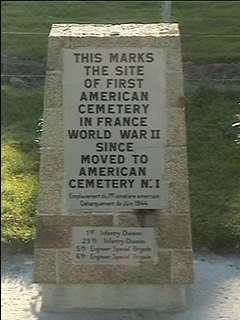 |
At Omaha Beach, the name of Warrant Officer James W. Tucker and the brave men of the 299th Combat Engineer Battalion who dug this first grave with their obstacle removing dozers and buried the first American Soldiers needs to be remembered. History is made up of the stories we remember to tell... Pass them on and Never Forget... |
| Warrant Officer James W. Tucker went on to fight through the Battle of the Bulge, into Germany and win five battle stars and a Bronze Star.
After the war he stayed in the military, serving in the Korean War and retiring in the early 60's.
His Bronze Star Citation says: “In a two week period, Warrant Officer Tucker, by his marked ingenuity and untiring efforts, converted eight heavy tractors into armor protected equipment to be used in removing underwater and beach obstacles during the invasion of the European continent. On June 6, 1944, in the face of sporadic artillery, mortar and small arms fire, he personally led his crew onto the invasion beach and supervised the removal of numerous obstacles. By his technical knowledge, fortitude and devotion to duty, Warrant Officer Tucker reflects credit upon himself and the military service.” Warrant Officer James W. Tucker was buried in Arlington National Cemetary with full military honors in 1983. The "Famous 299th Engineer Combat Battalion" also received the Presidential Citation for Outstanding Gallantry on D-Day in Normandy. |
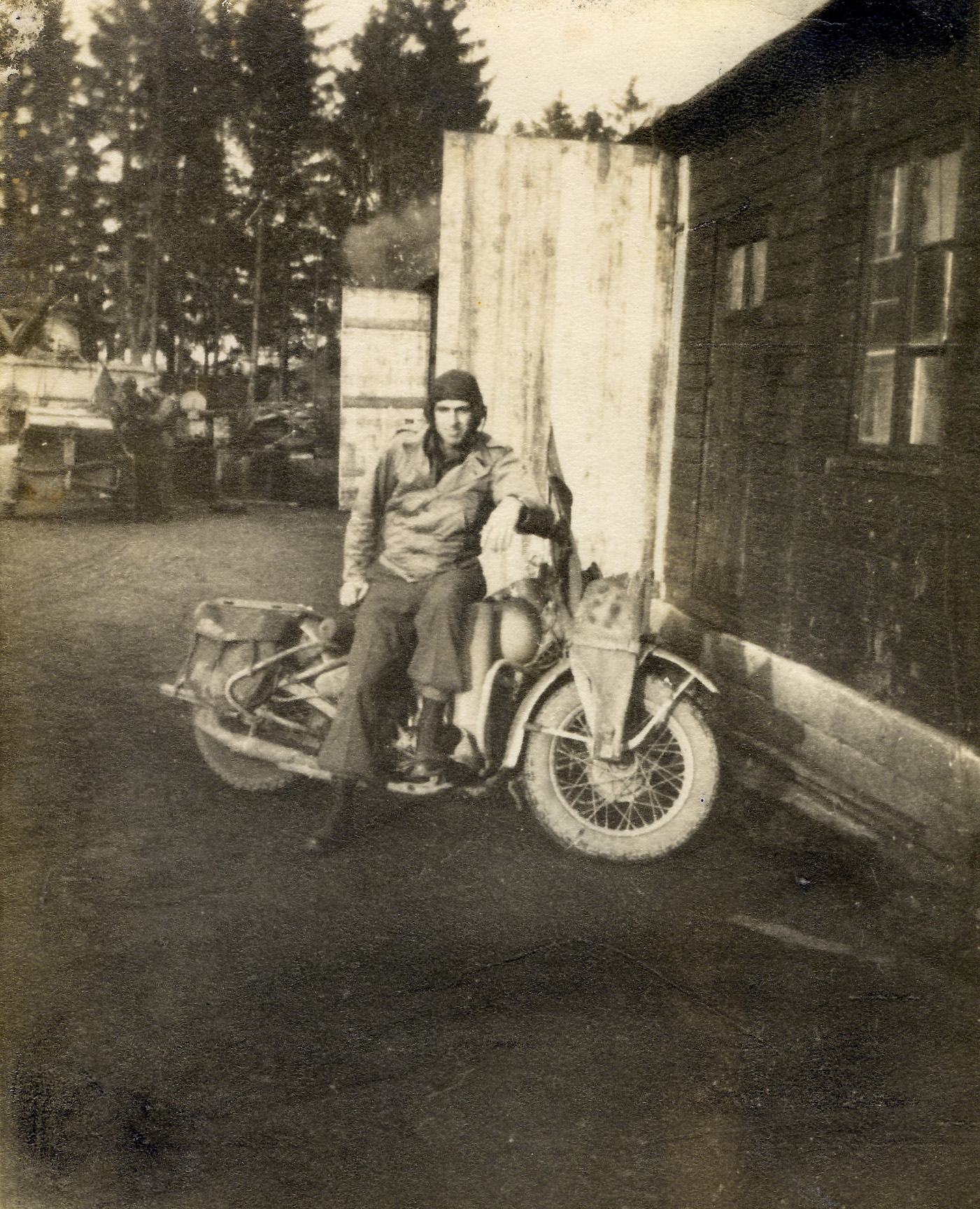
Below are a few photos of James W. Tucker in Europe after D-Day. Click images below for a larger view. |
|
299th "Headquarters & Service" Company somewhere in Belgium during WWII. Front Row (left to right): Barnello, "Shorty" Malinowski, ?, Frank Buffamonte, ? Middle Row (left to right): ?, Dick Tromiter, ?, Chilson, ?, ?, Back Row (left to right) : ?, ?, ?, WO James W. Tucker (wearing the helmet) , Sam Malamanchi, ? If you know any of these men, please let us know: webmaster@299thcombatengineers.com |

|
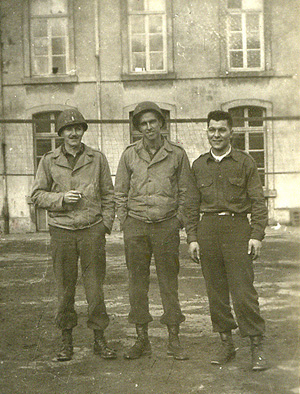
299th in Belgium during WWII (left to right) 1st Lt. Harold R. Jenkins, WO James W. Tucker, CWO Alfred E. DiOrio Photo provided by: 299th webmaster |
|
WO James W. Tucker in Belgium during WWII on Military Harley Photo provided by: 299th webmaster |
 |
Click Here for news stories and video about James W. Tucker...
|
 |
Copyright © 2006 / All rights reserved. |